

Figure 1: Modern tech workplace typical for H-1B roles.
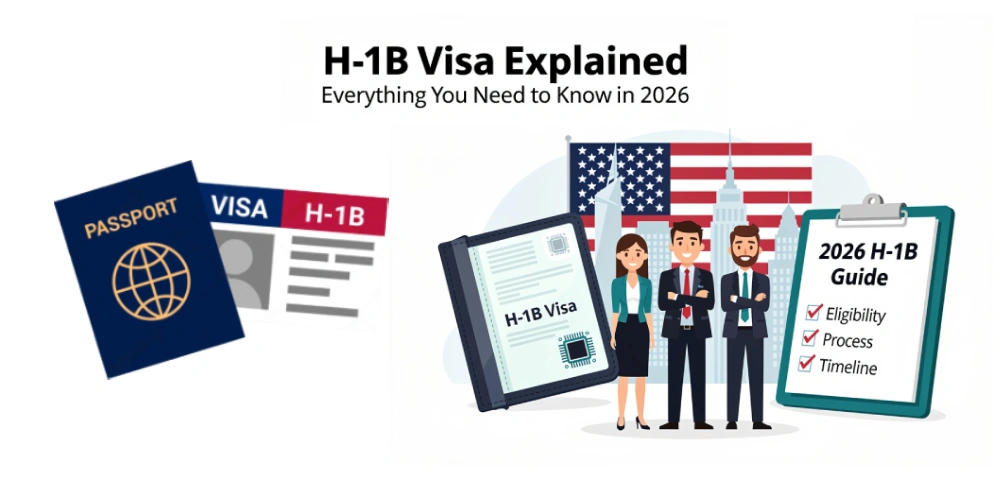
H-1B Visa Explained: Everything You Need to Know in 2026
The H-1B visa remains one of the most talked-about work visas in the United States, especially among skilled professionals in technology, engineering, healthcare, finance, and research. As we move into 2026, the H-1B program continues to evolve with policy updates, compliance changes, and increased competition. This guide explains the H-1B visa in simple terms, covering eligibility, process, timelines, costs, and future trends—without confusion or legal jargon.
What Is the H-1B Visa?
The H-1B visa is a non-immigrant work visa that allows US employers to hire foreign professionals for specialty occupations requiring theoretical or technical expertise.
In 2026, the core purpose remains unchanged: to fill skill gaps where qualified US workers are limited.
Specialty Occupations
H-1B Eligibility Requirements (2026)
Employee Eligibility
- A bachelor’s degree or higher in a relevant field
- Specialized knowledge related to the job role
Employer Responsibilities
- Offering a role that qualifies as a specialty occupation
- Paying the prevailing wage as defined by the US Department of Labor
Note: Meeting these requirements does not guarantee selection due to the annual cap.
H-1B Cap and Lottery System Explained
Key Lottery Insights (2026)
- Beneficiary-centric selection: Reduces duplicate registrations and improves fairness.
- Electronic Registration: The initial step is completely online.
- Fraud Monitoring: Selection is random but monitored for fraud.
- One Chance: Each beneficiary can be selected only once per fiscal year.
H-1B Application Process Step-by-Step
Registration
Employer registers candidate in the lottery.
LCA
Selected registrations proceed with Labor Condition Application.
Filing I-129
Employer files Form I-129 with USCIS.
Stamping
Visa stamping or status change occurs after approval.
H-1B Validity, Extensions, and Portability
Initial Validity
Granted for 3 years.
Total Duration
Can be extended up to 6 years.
Grace Period
60 days applies after job loss.
Portability: H-1B holders may work for a new employer upon filing of a valid transfer petition without restarting the lottery.
H-1B Visa Costs and Who Pays Them
| Fee Type | Typical Payer |
|---|---|
| Registration Fee | Employer |
| USCIS Filing Fee | Employer |
| ACWIA Training Fee | Employer |
| Fraud Prevention Fee | Employer |
By law, employers must bear most H-1B costs. Employees should not pay mandatory filing fees.
H-1B Visa in 2026: Policy Trends and Changes
Stricter Scrutiny
Increased audits and site visits are standard for 2026.
Wage Protection
Policies focus heavily on meeting prevailing wage levels.
AI Integration
USCIS uses AI-driven systems to flag inconsistencies.
H-1B Visa and Green Card Pathway
For many professionals, the H-1B visa is a stepping stone toward permanent residency. Starting the green card process early helps avoid long-term visa issues.
- EB-2: For advanced degree professionals.
- EB-3: For skilled workers and professionals.
Common H-1B Myths You Should Ignore
Tips to Improve Your H-1B Chances in 2026
- Choose employers with strong compliance history.
- Align your education clearly with the job role.
- Ensure accurate documentation and timelines.
- Explore cap-exempt employers like universities.
Frequently Asked Questions (FAQs)
Is the H-1B visa still worth pursuing in 2026?
Can fresh graduates apply for H-1B?
Does AI impact H-1B approvals?
Can H-1B holders work remotely in 2026?
Final Thoughts
The H-1B visa in 2026 continues to be both an opportunity and a challenge. Success depends on knowledge, preparation, and choosing the right employer.
For professionals aiming to build a career in the US, understanding the H-1B process in detail is no longer optional—it’s a necessity. Staying informed, compliant, and adaptable will make all the difference in navigating the future of work visas.